What Home Services Do I Need for Winter Home Prep in Albany, NY?
The situations described here are composites drawn from the types of jobs and decisions we encounter regularly. Names and specific figures are illustrative.
A couple bought a 1950s Cape in Schenectady in August. It was their first house, and their home inspection report had eleven items flagged for winter: full gutters, an attic with thin insulation, a garage hose spigot, drafty doors, a furnace with no service record, and a few others. They had about $3,000 set aside before December. Their question was simple: which of these items needed a professional, which kind of professional, and in what order. That is what winter home prep in Albany, NY and the surrounding Capital Region usually comes down to. It is less a checklist than a sorting job.
This post walks through how that list got sorted, what got done first, and what they decided could wait a year.
What was actually on the list
The report read like most inspection reports do: every item sounded equally urgent. Here is what it said, in plain terms. The gutters on the back of the house were packed with leaves from a large maple, and one corner had pulled away from the fascia. The attic had roughly three to four inches of old fiberglass between the joists. The hose spigot on the garage wall had no separate shut-off they could find. Water lines ran along the outside wall of the unheated garage. The back door let in daylight at the bottom, and two window sills had cracked caulk.
Then there were the bigger systems. The gas furnace was 17 years old, with no sticker showing when it was last serviced. The living room fireplace had not been used by the previous owners for years. And the couple wanted a portable generator, because a neighbor had told them about losing power for two days during a storm the winter before.
Their first instinct was to call one company and have everything done at once. That was the misconception. No single trade covers all of it, and a few of the items were cheap enough that paying anyone to do them made no sense.
Sorting it by who should touch it
The first useful step was to split the list into three columns. Handyman work is the repair and sealing work: gutters, caulk, weatherstripping, the spigot, pipe sleeves, the door. Licensed or specialized trades take the furnace, the chimney, any blown-in insulation job, and any generator hookup to the house wiring. The homeowners could handle the rest themselves in an afternoon.
| Item from the report | Who handled it | Why |
|---|---|---|
| Gutters, loose corner, door and sill sealing, spigot, pipe sleeves | Handyman | Repair and sealing work, done in one or two visits |
| Furnace service, chimney inspection | HVAC technician, chimney sweep | Combustion equipment needs a qualified professional |
| Adding attic insulation | Insulation contractor | Blown-in equipment, quoted separately |
| Generator connection to house wiring | Licensed electrician | Electrical work outside handyman scope |
| Hoses, thermostat habits, alarm batteries | Homeowners | No tools or trade needed |
Seeing it laid out this way changed the budget conversation. The handyman column was a known number at an hourly rate with a written estimate. The licensed-trade column was a set of separate calls they needed to make soon, because furnace and chimney companies book up once the first cold week hits. Our handyman services in the Capital Region cover the first column, and part of the job on a list like this is saying clearly which items belong to someone else.
The attic was where the real money question sat
The couple had been leaning toward new windows. The windows were original wood units with storms, and they felt drafty. But the attic told a different story. Albany County sits in climate zone 5A[1], and ENERGY STAR’s retrofit guidance for zone 5 says an attic that already has three to four inches of insulation should be brought up to R49[2]. Three or four inches of old fiberglass is a long way short of that.
There was a second reason to start overhead. Cape Cod houses have short, sloped ceilings on the second floor and knee walls, and that is where heat tends to leak into the roof. The University of Minnesota Extension explains that ice dams form when heat from the house warms the upper roof above freezing while the edge stays below freezing, so melting snow refreezes at the eave[3]. It also says that in many homes, air leaking from the living space into the attic is the main source of that heat, and that the first long-term fix is to make the ceiling airtight before adding insulation[3].
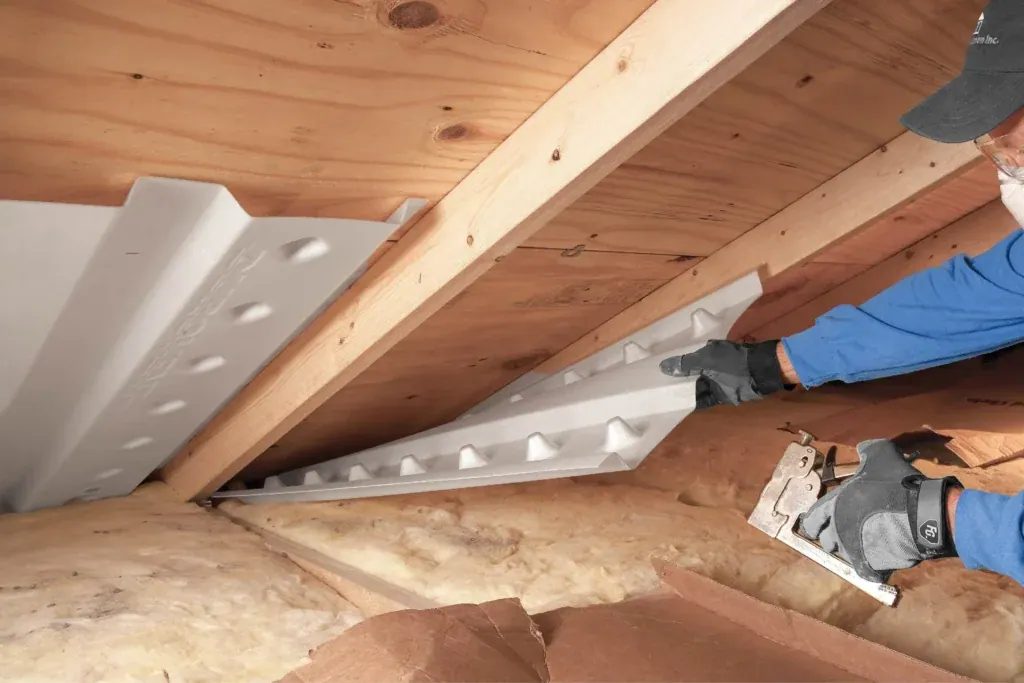
So the order became: seal the obvious openings first (the attic hatch, the gaps around the bathroom fan housing and a ceiling light box), then get an insulation contractor to quote blowing in more. The windows went on next year’s list. Spending window money first would have left the biggest heat loss in place, and the gutters would still have been feeding water toward an eave that was set up to ice over.
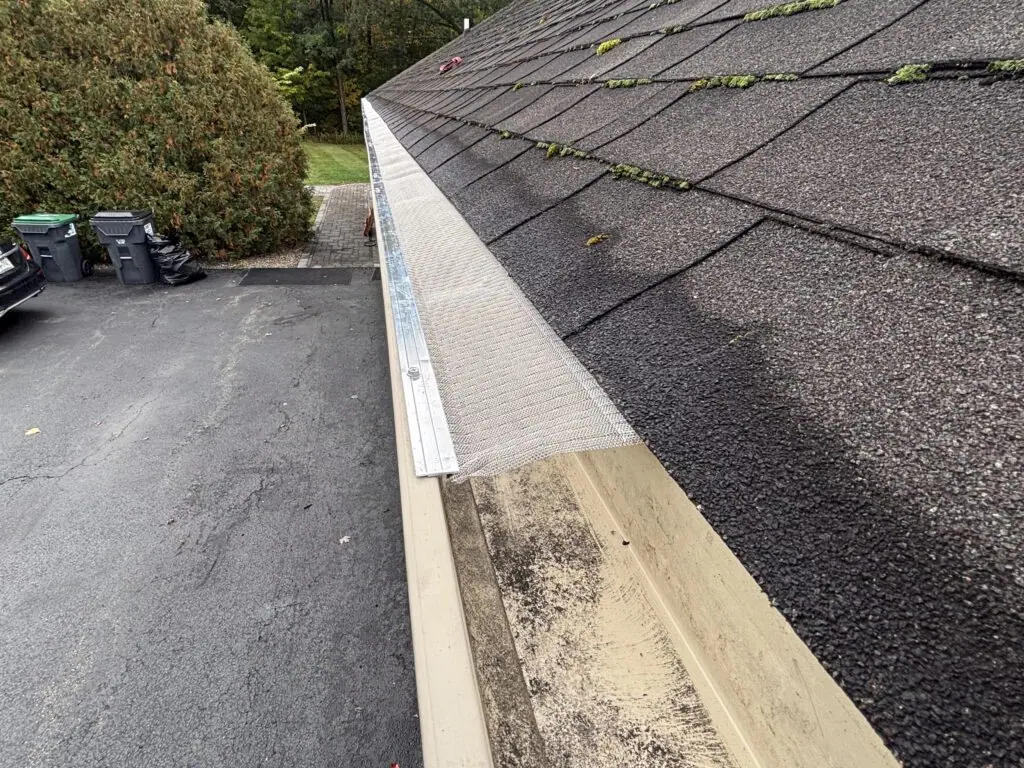
The gutters were part of the same conversation. Clearing them and refastening the loose corner did not prevent ice dams on its own. What it did was make sure fall rain and early melt left the roof edge and drained away from the foundation instead of spilling behind the fascia. We have written about a fall gutter cleaning that turned into a fascia rebuild in Delmar, which is what a loose gutter corner can become if it is left for another season.
The water lines nobody had looked at
The garage was the part of the house the couple had barely thought about. The American Red Cross lists the pipes that freeze most often: outdoor hose bibs, supply lines in unheated areas such as basements, crawl spaces, attics and garages, and pipes along exterior walls with little or no insulation[4]. This house had all three in one wall.
The handyman part was straightforward. The hose spigot got an indoor shut-off valve so it could be drained, and the exposed hot and cold lines along the garage wall got foam pipe sleeves. The Red Cross recommends exactly that: close the inside valve to the outdoor bib, open the outside tap to let it drain, and insulate both hot and cold lines in unheated spaces[4]. If the spigot itself is cracked or dripping, that becomes a repair rather than a drain-down, and our post on a split sillcock in Colonie walks through that version of the job.
The homeowner part cost nothing. Disconnect the hoses. Keep the garage door closed on cold nights. Keep the thermostat at the same setting day and night during hard cold, and if they travel over the holidays, leave the heat at no lower than 55 degrees[4].
Caulk, weatherstripping, and the back door
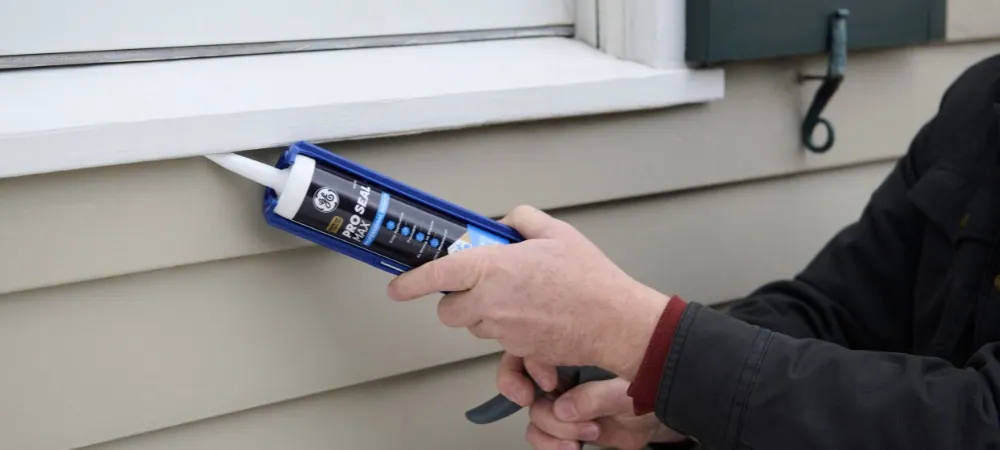
The back door was the item they could feel. It had a worn sweep and a threshold that had been adjusted all the way down. A new sweep, new weatherstripping on the latch side, and raising the threshold took care of the daylight at the bottom. The two cracked window sills got the old caulk cut out and new exterior sealant run along the joint. None of it was complicated, but it is the kind of work people put off because each piece seems too small to call someone about.
If a door is warped or the frame is out of square, weatherstripping only goes so far. We covered that decision in more detail in a Loudonville drafty door repair versus replacement. In this house the door itself was sound, so a few hours of adjustment was the right call.
Where the handyman list stopped
The furnace and fireplace were the items the couple most wanted to hand off to whoever was already at the house. That is not how it should work. The National Fire Protection Association’s guidance is to have heating equipment and chimneys cleaned and inspected every year by a qualified professional[5]. With no service record on a 17-year-old furnace and a fireplace nobody had used in years, both calls needed to go out before the first cold week, not after it.
“Heating equipment and chimneys should be cleaned and inspected every year by a qualified professional[5]. That is not handyman work, so those calls go on the list first, and the caulking and gutters can follow.”
Alex Sandul, Owner, A&S Home Services
The generator was the other item that needed a clear line. A portable generator is useful in a long outage, but the Red Cross is direct about two things. Never run one inside a home, garage, basement or crawl space, and opening doors or windows does not prevent carbon monoxide buildup[6]. And never power house wiring by plugging the generator into a wall outlet, which is called backfeeding and puts utility workers and neighbors at risk of electrocution[6]. If the couple wanted the generator tied into the house, that was a licensed electrician’s job. Until then, it would run outdoors with extension cords to a few appliances.
The same Red Cross page recommends carbon monoxide alarms on every level of the home and outside sleeping areas[6]. The house had one, in the basement. Two more went on the homeowners’ shopping list.
How the weeks lined up
Once the list was sorted, the order mostly set itself. Here is how the weeks from late October into December fell for this house.
| When | What got done |
|---|---|
| Last week of October | Furnace service and chimney inspection booked; hoses disconnected |
| First week of November | Handyman visit: spigot shut-off, pipe sleeves, door, sills, attic hatch and ceiling gaps sealed |
| Mid-November | Gutters cleaned after the maple dropped its leaves; loose corner refastened |
| Late November | Insulation contractor quote; CO alarms added on each floor |
| December | Blown-in insulation, scheduled for the contractor’s first open date |
One detail is worth pointing out. The gutter cleaning was deliberately scheduled after the big maple finished dropping its leaves. Clearing them in the third week of October would have meant doing it twice.
What people usually ask at this point
The first question is usually whether all of this has to happen before the first snow. It does not. The furnace, the chimney and the outdoor water lines are the ones with a real deadline, because those are the items that cause a fire risk, a no-heat call or a burst pipe once steady cold arrives. Caulking and weatherstripping are about comfort and heating cost. They are better done in fall, but they are not emergencies.
The second question is whether gutter guards would have saved the cleaning. On this house, with one large maple over the back run, guards on that section made sense to price. On the front, with no trees, a yearly cleaning was cheaper. It depends on what is above the gutter.
The third is cost. The handyman column on this house came to roughly a day and a half of work at an hourly rate, plus materials. The furnace service, chimney inspection and insulation were separate bills from separate companies. The total stayed under their $3,000, mostly because the windows waited.
The last question is what to do if something fails in January anyway, like a pipe that freezes or a gutter that tears loose under ice. That is what our emergency repair services are for, and the page explains how same-day response works and which situations need a licensed plumber or 911 first.
What the first winter looked like
The couple got through their first winter without an ice dam, a frozen line or a furnace call. That is not proof that every step was necessary. It does mean the money went to the items most likely to cause damage, and the items they could feel but not afford yet waited a year without costing them more.
If there is a takeaway for a similar house, it is that winter home prep in Albany, NY works better as a sorted list than as one big project. Figure out which items belong to a licensed trade and book those first. Hand the repair and sealing work to one person in one or two visits. Keep the cheap homeowner tasks for yourself. And if the inspection report says the attic is thin, look up before you look at the windows.
If you have a list like this one and want the handyman items quoted, you can reach out to A&S Home Services here.
Sources
- Albany County, New York: Energy Resources (ASHRAE 169 climate zone), Open Energy Information (OpenEI)
- Recommended Home Insulation R-Values, ENERGY STAR (U.S. EPA)
- Dealing with and preventing ice dams, University of Minnesota Extension
- Preventing and Thawing Frozen Pipes, American Red Cross
- Heating Safety tip sheet, National Fire Protection Association
- Generator Safety Tips, American Red Cross